In the timber industry, managing stock accurately is one of the most important responsibilities of a sawmill. As the volume of timber increases, keeping track of received logs, measurements, processed material and finished stock can become difficult when records are maintained through registers, paper slips or separate Excel sheets.
For a growing sawmill, knowing only the total quantity of timber available is not enough. Management needs to know where the timber came from, how much was received, how much was processed, what quantity is currently in stock and how much has already been loaded or dispatched. This is where Sawmill Inventory Management Software can make stock control more organized and reliable.
Why Timber Stock Control Becomes Difficult
Timber moves through several stages inside a sawmill. Logs enter through the gate, measurements are recorded, material is sent for processing and the resulting timber is moved into finished stock. Later, the stock may be separated according to size, grade or customer requirements before loading.
When each stage is recorded separately, it becomes difficult to maintain one accurate view of the complete inventory. Information may be entered by different people at different points, increasing the chances of missing entries, calculation errors or delays in updating stock records.
As the business grows, these small gaps can create larger differences between physical stock and recorded stock. This can make it harder for management to identify where the difference occurred and what caused it.
How Sawmill Inventory Management Software Helps
The biggest advantage of Sawmill Inventory Management Software is that it can connect different stages of timber movement within one digital workflow.
Instead of maintaining separate records for receiving, measurement, processing, and loading, information can be captured digitally and used throughout the operation. This gives management a clearer view of the current stock position without depending entirely on manual updates from different departments. This approach is also part of the wider digitization in the timber industry, where sawmills are using technology to improve visibility and control over daily operations. For sawmills handling large volumes of timber, this connected approach can save time while improving the consistency of inventory records.
More Accurate Timber Measurement
Measurement plays an important role in timber inventory management. Logs can differ in length, diameter, grade and volume, making manual calculations time-consuming and prone to mistakes.
With inventory software, measurement details can be entered directly into the system and used for volume calculations and stock records. This reduces the need to repeatedly enter the same information and helps maintain consistency between measurement and inventory data.
Accurate measurement also gives management greater confidence in the stock figures being used for operational decisions.
Better Tracking of Timber Movement
Effective stock control requires more than knowing how much timber is available. Management should also be able to understand how that timber moved through the sawmill.
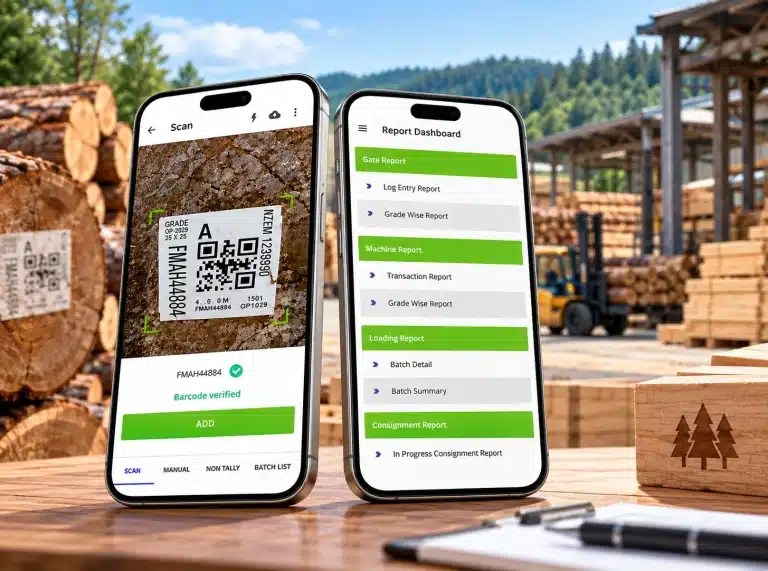
Digital systems can help connect information from gate-in, processing, stock and loading activities. Logs or batches can also be given digital identification through methods such as barcode or QR-based tracking, making it easier to follow material through different stages.
This improves visibility and makes it easier to identify the status of a particular consignment or batch without searching through multiple physical records.
Identifying Stock Differences Earlier
A stock difference can become difficult to investigate when it is discovered only during a physical stock check. If several days or weeks have passed, finding the exact point where the difference occurred can require checking a large number of records.
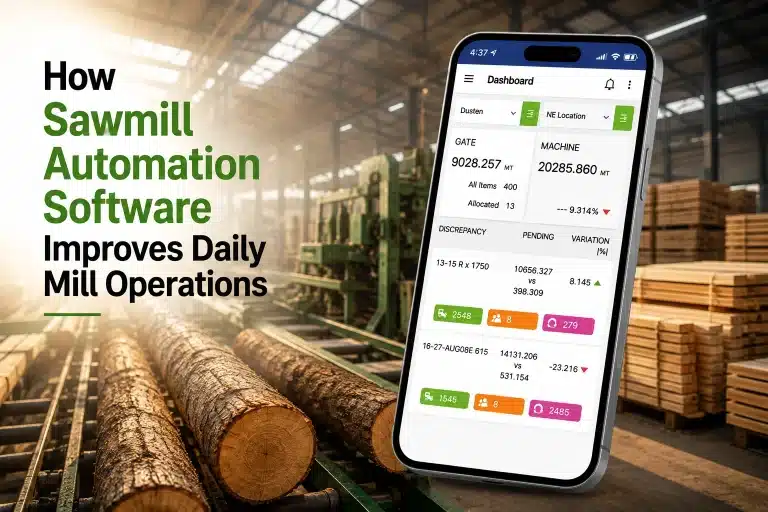
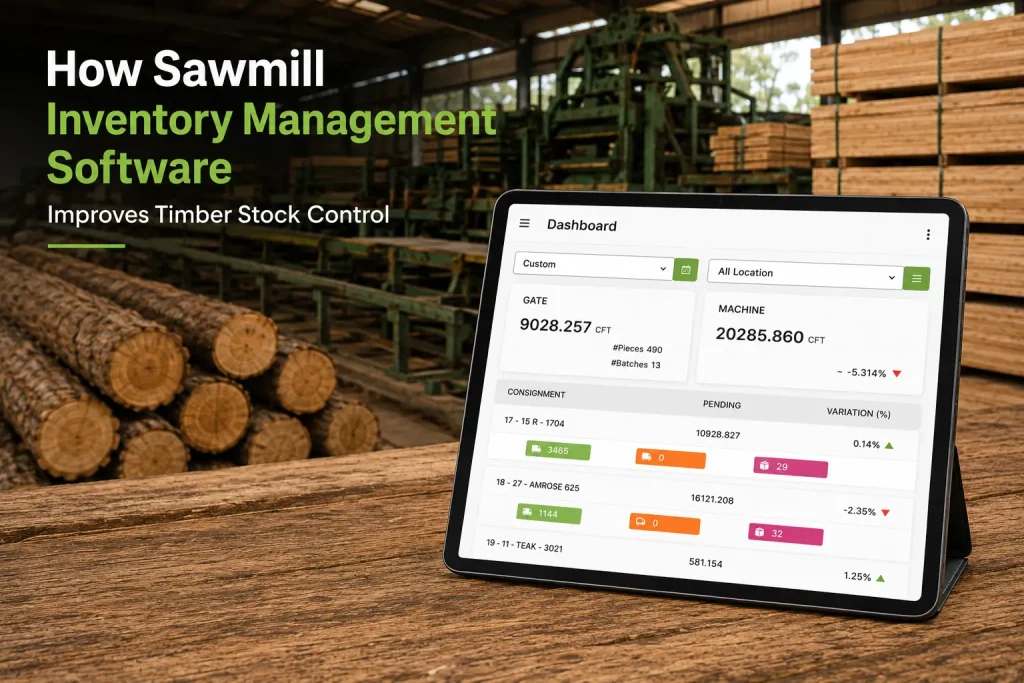
A connected digital system allows management to monitor different stages of timber movement more closely. Records of received quantity, processed output, available finished stock and dispatched material can be compared more easily.
If an unusual difference appears, management can focus on the relevant stage instead of manually checking the entire operation. This can improve control over timber movement and reduce the risk of unnoticed discrepancies.
Better Visibility for Management
Sawmill owners and managers cannot always be present at every stage of daily operations. With manual records, getting an accurate update may require checking registers, contacting staff or waiting for reports to be prepared.
A digital inventory system provides a more convenient way to access operational information. Management can review stock, processing and loading data from the system and get a clearer understanding of what is happening within the sawmill.
This visibility can help management identify issues sooner and make decisions based on current information rather than delayed updates.
Easier Inventory Reporting
Preparing inventory reports manually can take considerable time, particularly when information is spread across multiple records.
With software, data captured during regular operations can also be used for reporting. Stock information can be reviewed according to dates, consignments, processing activities or loading records without creating every report from the beginning.
This makes reporting more efficient and gives management a more consistent source of information for monitoring the business.
Moving Towards Better Stock Control
Implementing Sawmill Inventory Management Software is not simply about replacing a paper register with a digital screen. The real benefit comes from connecting different stages of the timber workflow and making information easier to capture, track and review.
For a sawmill handling increasing volumes of timber, better inventory control can reduce dependency on scattered records, improve visibility and make stock information easier to manage.
The goal is not to replace the experience of the people working in the sawmill. Instead, software gives them a more organized system for recording their work and gives management better information to monitor the movement of timber.
As sawmills continue to adopt digital processes, effective inventory management is becoming an important part of maintaining operational control. A well-connected digital system can help sawmills keep their timber stock more accurate, traceable and easier to manage.