India has a large timber industry, with approximately 6,457 sawmills operating across the country. And, there are ERP software solutions available for almost every industry, whether it is healthcare, education, manufacturing, timber, or any other business. But that does not mean every ERP software is the right fit for the sawmill industry.
Running a sawmill involves much more than just cutting logs and selling timber. It may look simple from the outside, but there is a lot going on behind the scenes. Every day, there are multiple activities to manage, starting from the arrival of logs and gate entry to measurement, machine processing, stock management, loading, and reporting. When all these activities are handled manually, keeping track of everything can become difficult, especially as the business grows.
This is where an ERP software system for the sawmill industry can make day-to-day management easier. Instead of maintaining separate registers, spreadsheets, and records for different activities, an ERP system can bring important operations together in one place.
Better Control From Gate Entry to Processing
The work starts as soon as timber enters the mill. Details such as vehicle numbers, consignments, log measurements, and gate entries need to be recorded properly.
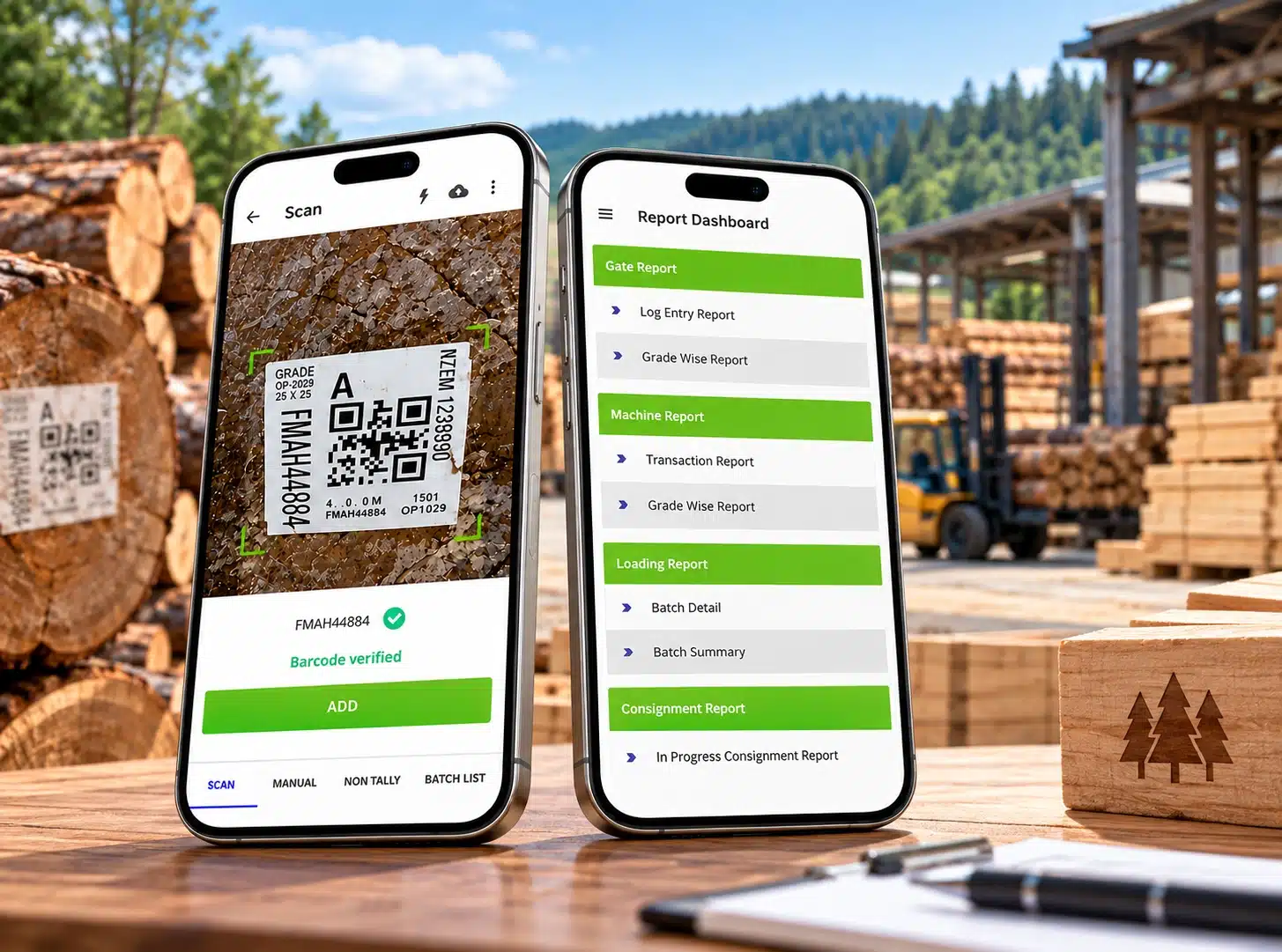
With manual records, missing entries or calculation mistakes are always possible. A digital system can keep these details organised from the beginning. Barcode or QR scanning can also help identify logs or consignments and reduce repeated data entry.
This gives the team a better way to follow timber as it moves through different stages.
Accurate Measurement and Production Tracking
Timber measurement needs to be accurate because even a small difference can affect the overall quantity. One log may not make much difference, but when hundreds of logs are processed, these small differences can add up.
With an ERP system, incoming log measurements and machine output can be recorded together. Managers can compare the figures and check if there is any unusual variation without searching through different registers.
If something does not look right, the team can check it at an early stage rather than finding the difference later while preparing the final records.
Know Your Stock Without Checking Multiple Registers
In a sawmill, knowing the current stock is important for making day-to-day decisions. But when stock details are written in different registers or spreadsheets, finding the actual figure can take time.
You may need to check how much timber has arrived, how much has been processed, what is still in the yard, and what has already been dispatched.
An ERP system keeps these records together and updates stock information as work moves forward. This makes it easier to check available timber, track movement, and plan the next job without going through multiple records.
Less Paperwork, More Useful Work
Manual data entry is repetitive. The same information may have to be written in different registers, checked again, and later used to prepare reports.
An ERP system can connect these activities so that information entered at one stage can be used at another. This reduces duplicate work and saves employees from spending too much time on paperwork.
The goal is not to replace the people doing the work; it is to make their work easier and more organised.
Find Where Material Loss Is Happening
Timber is valuable, so even a small difference in material should never be ignored. But finding the reason manually can be difficult.
Suppose the expected quantity does not match the final stock. The management may need to check gate entries, measurements, production records, and loading details one by one.
With a connected system, these records can be reviewed together. This gives managers a clearer idea of where a variation may have occurred and helps them take action sooner.
Reports That Actually Help Managers
Reports are a regular part of sawmill operations. Management may need information about production, stock, loading, consignments, or variations.
Preparing these reports manually can take a lot of time. An ERP system can organise operational data into useful reports, giving managers a quicker view of what is happening.
These reports can also reveal patterns, such as repeated production variations or higher material loss in a particular process.
Managing Teams and Multiple Locations
As a business grows, managing different teams or sawmill locations can become challenging. The person handling gate entry may be different from the person managing production or stock.
A good ERP system can give users access according to their roles while allowing management to see the bigger picture. For businesses operating from multiple locations, cloud-based access can make it easier for authorised users to check important information remotely.
What Should a Sawmill ERP Include?
A sawmill ERP should be designed around the actual work of a timber business. Instead of only managing basic business records, it should help teams track timber from entry to processing, stock, and loading.
Gate Entry: The system should record log entries, tally and non-tally logs, and scanned or non-scanned data. This gives managers a clearer view of the timber coming into the mill.
Machine Management: Production tracking should include tally and non-tally logs, with both CFT/CBM volume, and processing variations by consignment-vessel-wise, location-wise, machine-wise, and so on. This makes it easier to compare incoming material with machine output and spot unusual differences.
Loading: A useful system should track different outputs, including main sizes, off sizes, sawdust, firewood, and semi-finished products such as frames, sleepers, battas, ripsaw, fanta, boards, windows, doors, pallets, etc.
Stock: Species-wise stock management is also important for sawmills handling different types of timber, such as SAL, Kapur, Red Meranti, Yellow Meranti, Australian Pine, or other softwood and hardwood species..
Reporting: Managers should be able to access practical reports such as daily or weekly summaries of gate entry, machine output, loading, stock, mill-wise and location-wise variations, pending logs, log balances, and consignment recovery. Role-based access can also ensure that each team member sees the information relevant to their work.
Conclusion
A growing sawmill can quickly become difficult to manage when important information is scattered across notebooks, spreadsheets, and separate registers.
An ERP software system for the sawmill industry can bring gate entry, measurement, production, stock, loading, and reporting into one connected system. This means less manual work, better visibility, and easier tracking of material movement.
The real benefit is not simply replacing paper with software. It is having the right information available when managers need it. For sawmills looking to bring more control and structure to their daily operations, an industry-focused ERP system can be a practical step forward. You can also read about Sawmill Automation Software and how it can improve daily mill operations to understand how automation can further simplify and streamline sawmill management.